
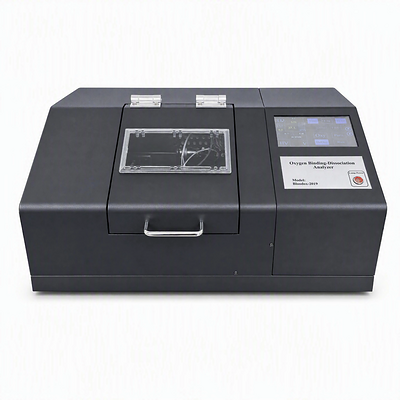
携放氧功能检测系统 (Bloodox-2019) 用于记录血红蛋白在不同氧分压条件下与氧结合和释放的动态过程,获得氧结合曲线和氧解离曲线,并通过 P50、Hill 系数等参数评价血红蛋白氧亲和力及携氧、释氧特性。适用于全血、红细胞裂解液、血红蛋白及血红蛋白类氧载体等样品。
一、核心特点
1. Clark 氧电极直接测量氧分压
2. 动态呈现血红蛋白携氧与释氧过程
3. 微量样品即可完成检测
4. 适用样品
- 全血 · 红细胞裂解液
- 血红蛋白溶液
- 血红蛋白类氧载体
- 其他需要评价血红蛋白氧结合/释放功能的样品
5. 智能控制实验条件
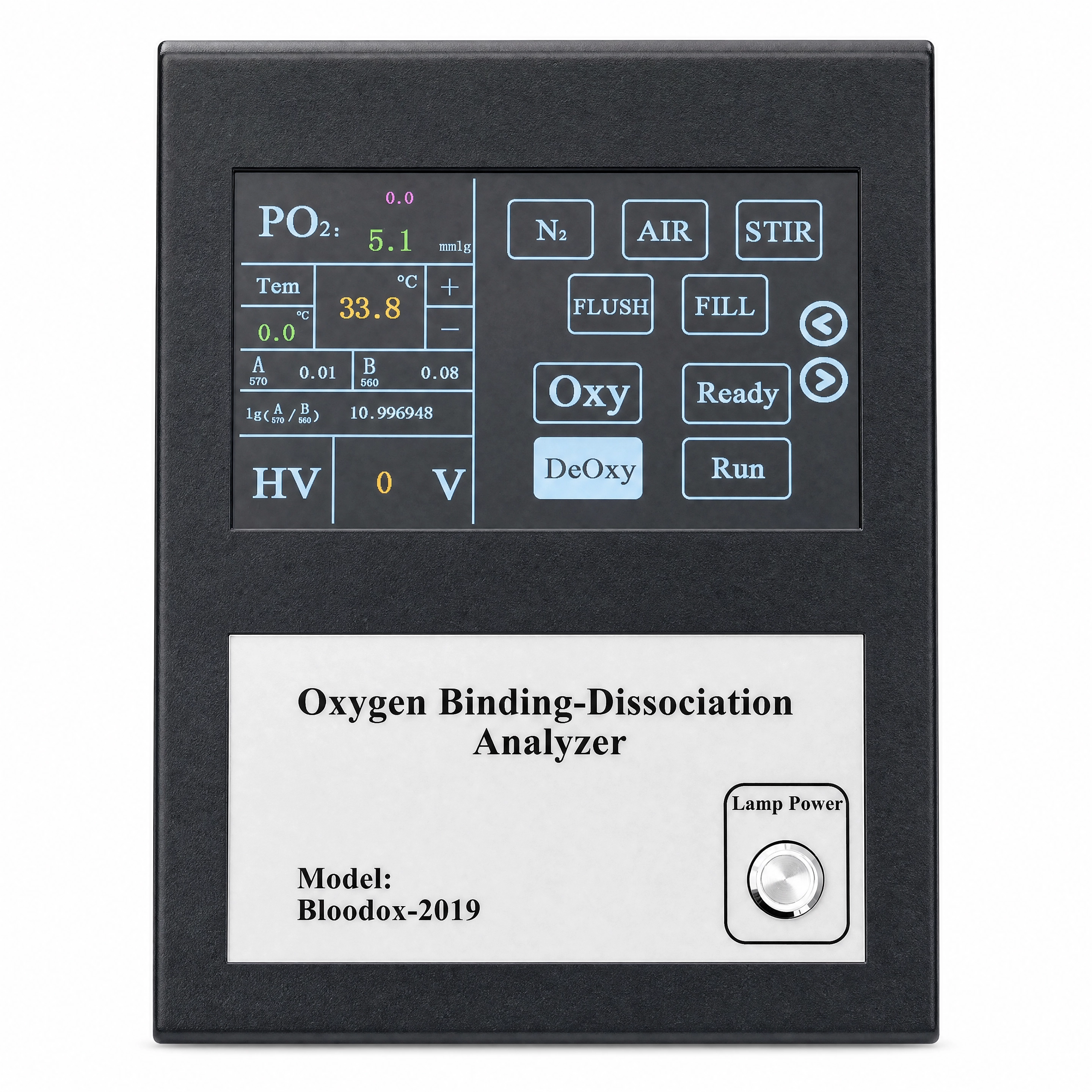
(1)气流精细设定
(2)智能温度调节
(3)集中化操作控制
- 空气 / 氮气选择
- 气体流量设定
- 氧合 / 脱氧过程控制
- 样品吸入
- 样品排出
- 氧分压实时监测
- 温度实时监测 减少实验过程中的重复人工操作,使实验流程更加便捷、规范。
二、测量原理
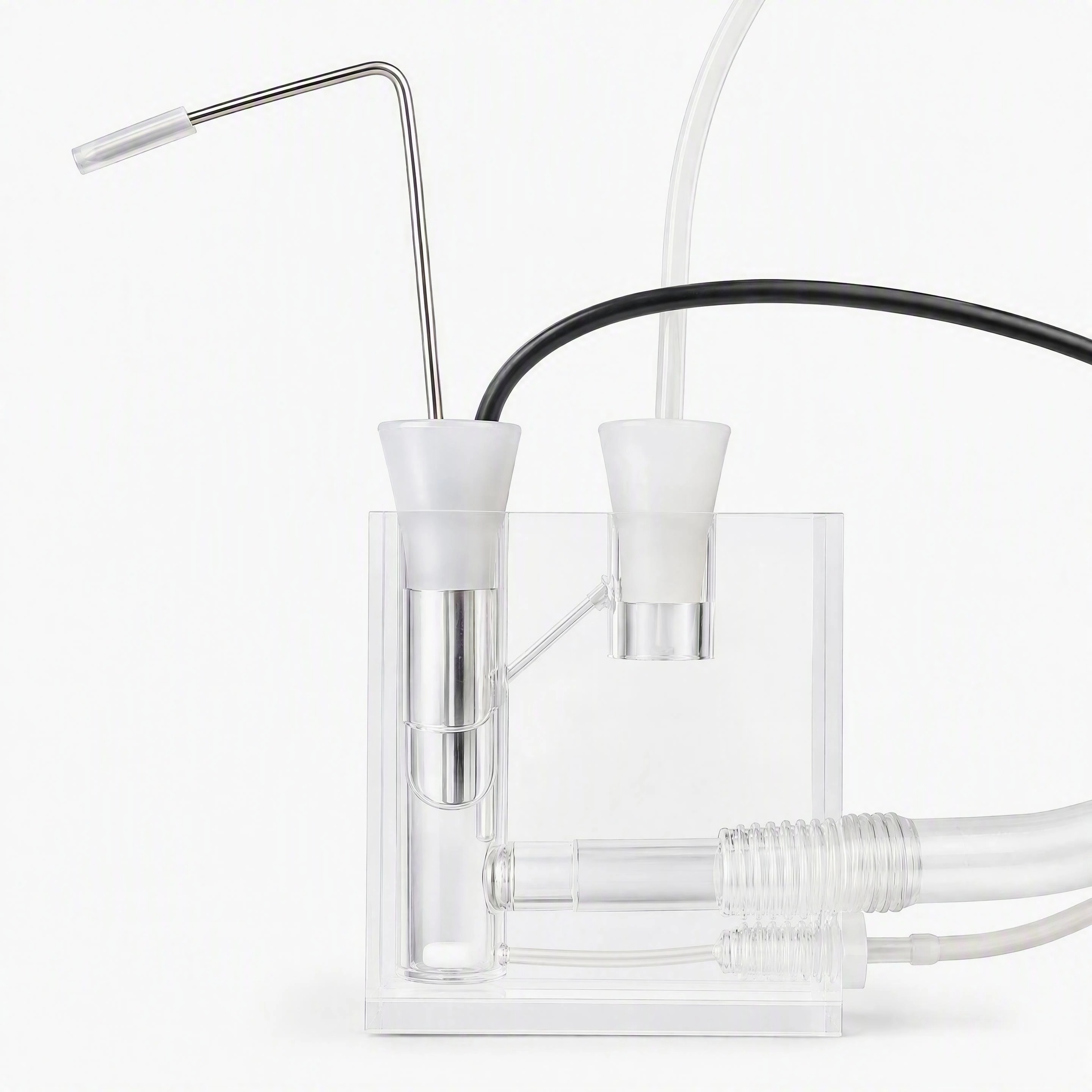
三、样品池
- 样品自动吸入
- 空气 / 氮气导入
- 样品排出 减少实验过程中对样品池的手工操作。
四、数据分析
1. 氧结合 / 氧解离曲线
软件实时记录并显示血红蛋白随氧分压变化发生氧结合或氧释放的过程。支持:
- Raw Curve|原始曲线 · Translation|曲线平移
- Smooth|曲线平滑
- LineFit|线性拟合
- Zero-Completion|归零补全
- 原始数据导出
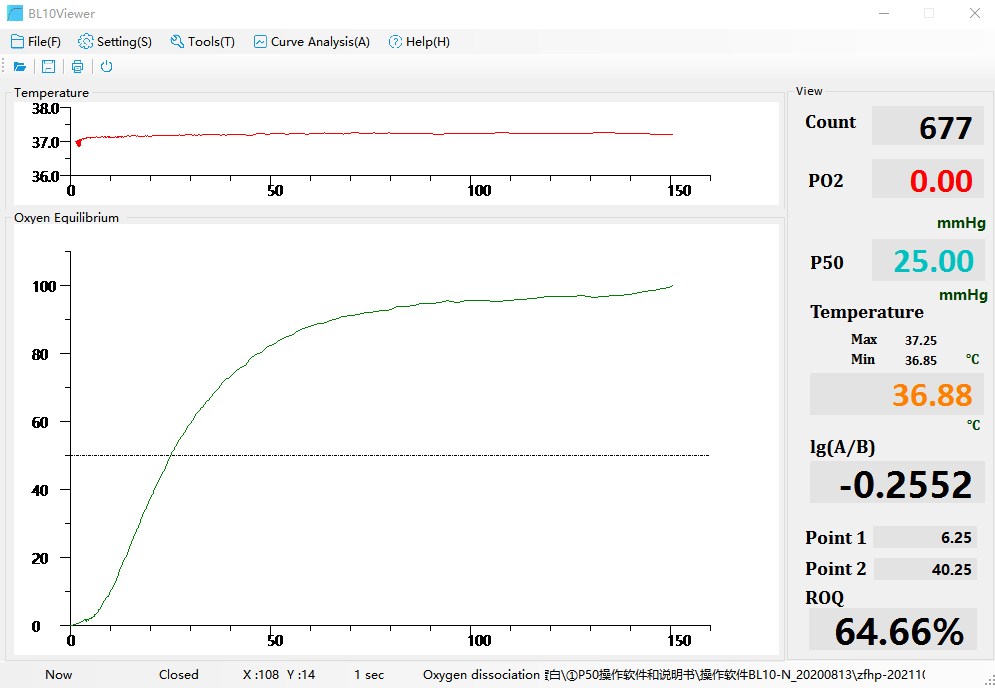
2. P50
血红蛋白氧饱和度达到50%时对应的氧分压。 P50 是评价血红蛋白氧亲和力的重要指标之一。
一般情况下:
P50升高 血红蛋白氧亲和力降低,氧释放倾向增加
P50降低 血红蛋白氧亲和力升高,氧结合倾向增加
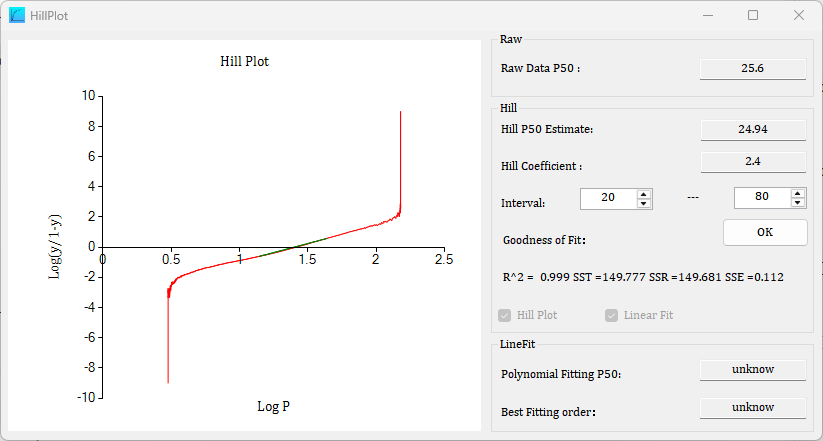
3. Hill 系数
通过 Hill 方程评价血红蛋白与氧结合过程中的协同性,可用于比较不同样品或不同实验条件下血红蛋白氧结合特性的变化。
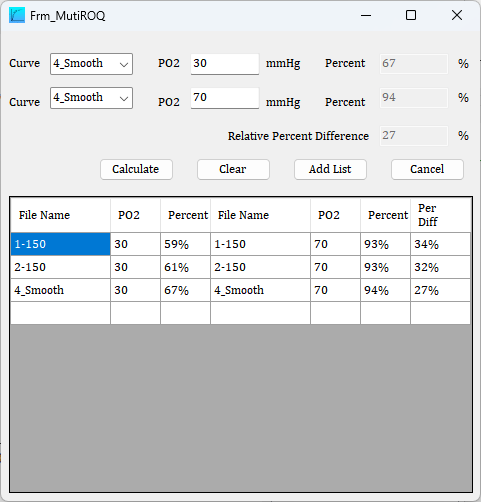
4. ROQ
可计算任意两个设定氧分压对应的氧饱和度差值,用于观察特定氧分压区间内血红蛋白氧合状态的变化。
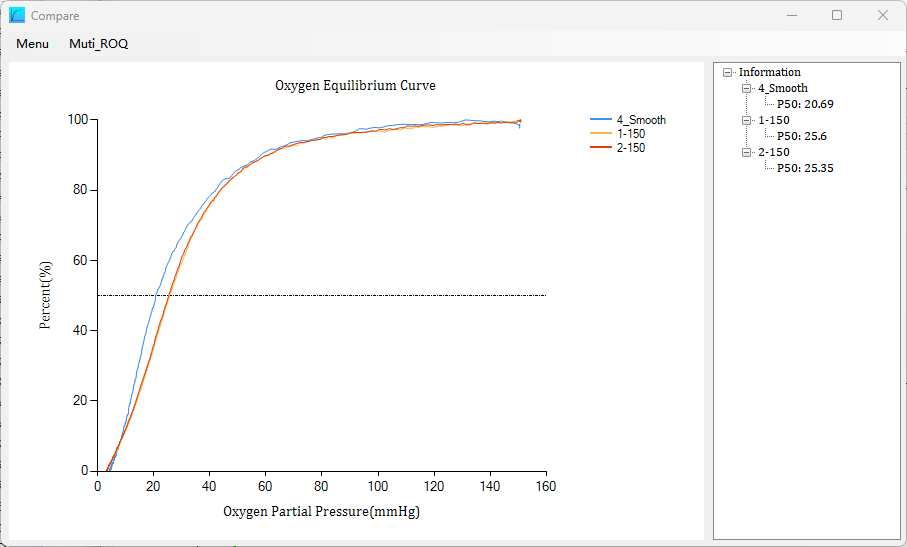
5. 多组结果比较
支持多条检测曲线同时显示,可直观观察和比较:
- 曲线左移 / 右移
- P50变化
- 氧亲和力变化
- 氧结合特性变化
- 氧释放特性变化
- 不同实验组之间的差异
五、应用领域
1. 红细胞携氧功能研究
- 全血携氧、释氧功能评价
- 红细胞氧亲和力研究
- 红细胞功能变化研究
2. 血液储存研究
- 血液储存过程中红细胞功能变化
- 不同保存条件对携氧、释氧功能的影响
- 不同处理方式对血红蛋白氧亲和力的影响
3. 缺氧与高原医学研究
- 高原环境下血红蛋白氧亲和力变化
- 缺氧适应机制研究
- 高原相关红细胞功能变化研究
4. 血液相关基础研究
可用于红细胞增多、高黏状态、溶血、血栓等相关基础研究中血红蛋白携氧功能的评价。
5. 血红蛋白及氧载体研究
- 血红蛋白功能评价
- 血红蛋白类氧载体评价
- 不同配方及处理条件对氧结合、释放功能的影响
六、软件系统
BL10 数据采集软件
用于实验过程监测、参数显示及原始数据采集。
BL10 Viewer 数据分析软件
用于氧结合/氧解离曲线处理、参数分析及不同实验结果比较。
七、设备构成
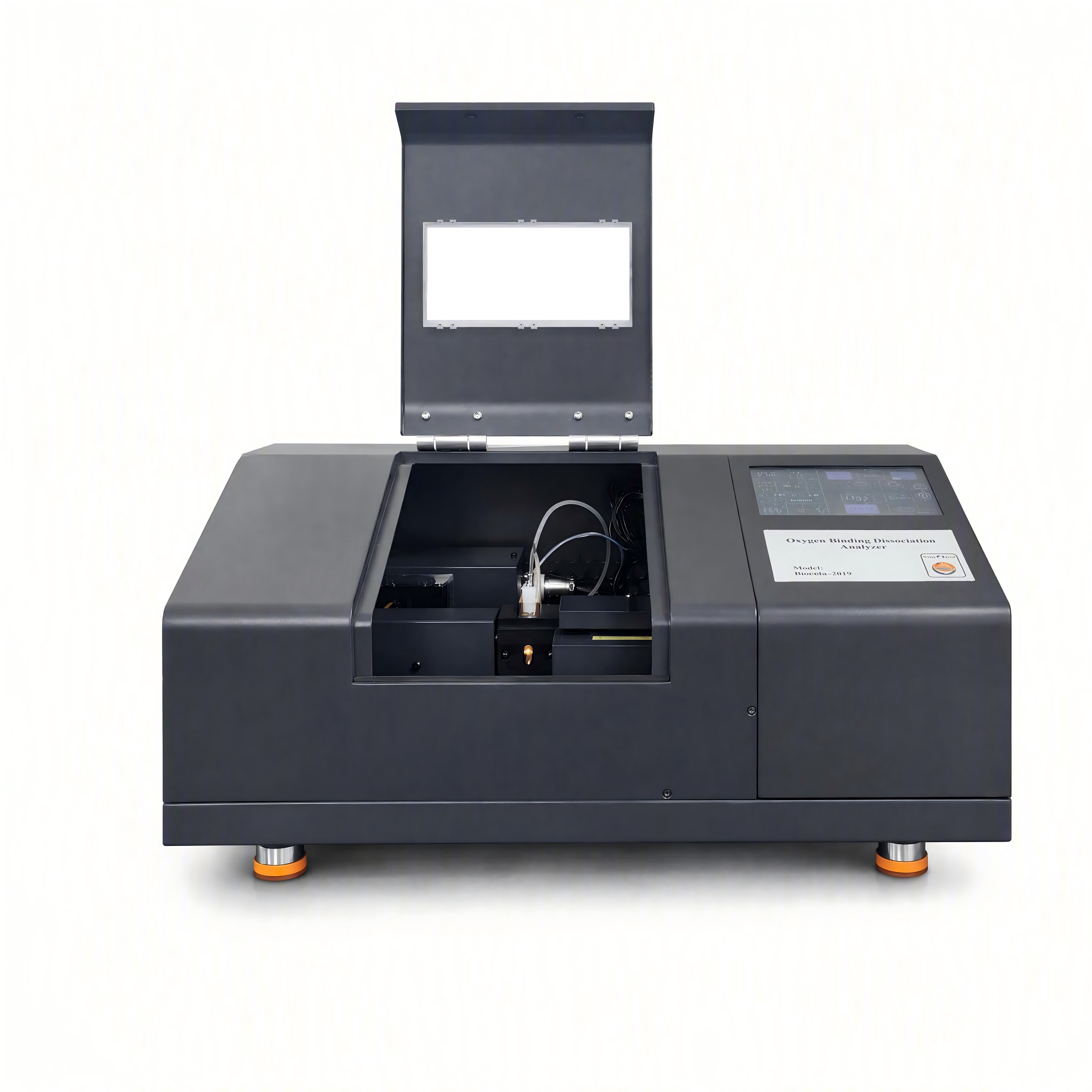
Bloodox-2019 主要由以下模块组成:
- 双波长光学检测系统
- Clark 氧电极
- 样品池
- 气体流路控制系统
- 温度控制系统
- 温度传感器
- 磁力搅拌系统
- 电路控制模块
- 触屏控制系统
- 数据采集与分析软件
八、技术规格
|
项目 |
参数 |
|
氧分压检测方式 |
Clark 氧电极 |
|
血红蛋白检测方式 |
双波长分光光度法 |
|
气体 |
空气 / 氮气 |
|
气体流量设定范围 |
0–20 mL/min |
|
测量温度 |
37 ± 0.1 ℃ |
|
样品量 |
约3–6 mg血红蛋白 |
|
通信方式 |
串口转 USB |
|
电源 |
AC 110–240 V,50/60 Hz |
|
主机尺寸 |
64 × 40 × 32 cm |
|
数据采集软件 |
BL10 |
|
数据分析软件 |
BL10 Viewer |
文献资料
- Zhong, X., et al., Hb-O2 affinity parameters as prognostic factors for 28-day mortality in ARDS patients: A prospective study. Medicine in Novel Technology and Devices, 2026. 29: p. 100418.
- Wang, L., et al., Hemocompatibility Evaluation of PEGylated Bovine Hemoglobin. International Journal of Molecular Sciences, 2026. 27(3): p. 1262.
- Shu, P., et al., Spermine: A Hemoglobin Modifier That Reduces Autoxidation and Regulates Oxygen Delivery. International Journal of Molecular Sciences, 2026. 27(3): p. 1197.
- Chu, Z., et al., Simulated Oxygen Supply Efficiency Assessment to Represent Stored Red Blood Cells Quality. Life, 2026. 16(2): p. 205.
- Sheng, M., et al., Hemoglobin Oxygen Affinity Does Not Change in the Canine Model of Moderate Acute Normovolemic Hemodilution. ACS Omega, 2025. 10(36): p. 41620-41629.
- Sheng, M., et al., Lysine Lactylation of Hemoglobin Promotes Oxygen Release in Red Blood Cells. ACS Omega, 2025. 10(21): p. 21889-21907.
- Li, Q., et al., Staphylococcus aureus β-hemolysin impairs oxygen transport without causing hemolysis. Virulence, 2025. 16(1): p. 2490208.
- Cui, T., et al., 3′ UTR-truncated HMGA2 promotes erythroblasts production from human embryonic stem cells. Stem Cells Translational Medicine, 2025. 14(1): p. szaf001.
- Zhang, L., et al., Preliminary Study on Polymerization between Hemoglobin and Enzymes during the Preparation of PolyHb-SOD-CAT-CA. Doklady Biochemistry and Biophysics, 2024. 518(1): p. 463-474.
- Yu, H., et al., An ex vivo method to evaluate vasoactivity induced by hemoglobin-based oxygen carriers in resistance vessels. Front Bioeng Biotechnol, 2024. 12(1376806): p. 2024.
- Shu, P., et al., Cefmetazole sodium as an allosteric effector that regulates the oxygen supply efficiency of adult hemoglobin. Journal of Biomolecular Structure and Dynamics, 2024. 42(14): p. 7442-7456.
- Meng Weicheng, C.Y.W.Y.A.N.N.L.I.U.Z.W.U.X.W.F.H.U.X., The Impact of Reduced Bisphosphoglycerate Mutase(BPGM)Enzyme Activity in Sensitized Red Blood Cells on Oxygen Carrying/Releasing Capacity. JOURNAL OF CLINICAL TRANSFUSION AND LABORATORY MEDICINE, 2024. 26(3): p. 308-314.
- Zhao, B., et al., Effect of roxadustat on red blood cell lifespan in patients with long-term haemodialysis: a single-centre, prospective, single-arm study. Clinical Kidney Journal, 2023. 16(9): p. 1500-1507.
- Zhang, F., et al., An extra-erythrocyte role of haemoglobin body in chondrocyte hypoxia adaption. Nature, 2023. 622(7984): p. 834-841.
- Xu, L., et al., Generation of Rh D-negative blood using CRISPR/Cas9. Cell Proliferation, 2023. 56(11): p. e13486.
- Liu, R., et al., The Preliminary Study on Preparation Technology of PolyHb-SOD-CATCA - The Effects of Different Extractants. Current Pharmaceutical Biotechnology, 2023. 24(15): p. 1928-1937.
- Li, B., et al., PEG-conjugated bovine haemoglobin enhances efficiency of chemotherapeutic agent doxorubicin with alleviating DOX-induced splenocardiac toxicity in the breast cancer. Artificial Cells, Nanomedicine, and Biotechnology, 2023. 51(1): p. 120-130.
- Chu, Z., et al., Resveratrol, a New Allosteric Effector of Hemoglobin, Enhances Oxygen Supply Efficiency and Improves Adaption to Acute Severe Hypoxia. Molecules, 2023. 28(5).
- Zhang, H., et al., Phenoxyaromatic Acid Analogues as Novel Radiotherapy Sensitizers: Design, Synthesis and Biological Evaluation. Molecules, 2022. 27(8).
- Zhang, G., et al., Preliminary Intermittent Hypoxia Training Alleviates the Damage of Sustained Normobaric Hypoxia on Human Hematological Indexes and Cerebral White Matter. High Altitude Medicine & Biology, 2022. 23(3): p. 273-283.
- Wang, L., et al., Remote ischemic conditioning enhances oxygen supply to ischemic brain tissue in a mouse model of stroke: Role of elevated 2,3-biphosphoglycerate in erythrocytes. J Cereb Blood Flow Metab, 2021. 41(6): p. 1277-1290.
- Kanagarajan, S., et al., Production of functional human fetal hemoglobin in Nicotiana benthamiana for development of hemoglobin-based oxygen carriers. International Journal of Biological Macromolecules, 2021. 184: p. 955-966.
- Chu, Z., et al., The P(50) value detected by the oxygenation-dissociation analyser and blood gas analyser. Artif Cells Nanomed Biotechnol, 2020. 48(1): p. 867-874.
